Greater Manchester’s Clean-Taxi push: £8m Hackney Support Fund and what it means
taxi finance direct • January 7, 2026
2 BMW I3's parked next 2 a public charger.


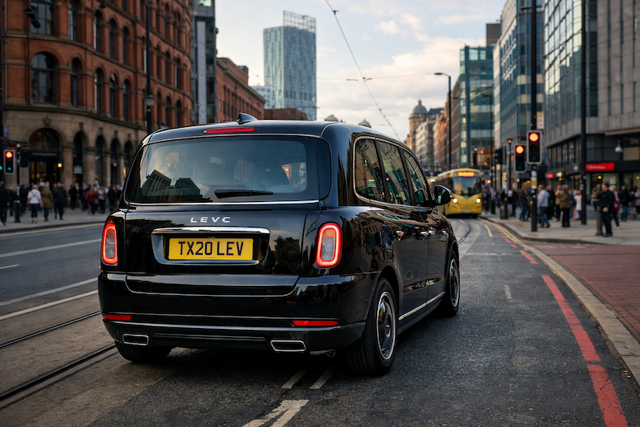
Greater Manchester has launched a serious plan to clean up taxi emissions. A key part is the new £8 million Hackney Support Fund, aimed at helping black-cab owners replace old, polluting vehicles with cleaner ones. The fund sits inside the city-region’s wider Clean Air Plan, which uses investment rather than charges to meet legal air-quality limits. Clean Air Greater Manchester+1


What the Hackney Support Fund covers


The fund provides grants to eligible hackney carriage licence holders to buy compliant vehicles. The amounts vary:

  • Up to £12,560 for a new or second-hand zero-emission capable (ZEC) wheelchair-accessible vehicle.
  • £6,280 for a compliant wheelchair-accessible petrol/diesel vehicle (Euro 4+ petrol or Euro 6 diesel).
  • £7,530, £6,280 or £3,770 for different non-wheelchair-accessible replacement types depending on whether the vehicle is ZEC or meets Euro standards. Clean Air Greater Manchester

Applications will open in funding rounds and will be taken on a first-come, first-served basis. Round two will allow applicants who already replaced their vehicle after 23 January 2025 to apply, subject to funds remaining. Eligible drivers will be notified by email with details of the online portal. Bolton Council


Why the fund matters


Taxis are a visible part of the urban fleet and can be wheelchair-accessible — so targeting hackneys helps cut pollution and protect inclusive travel. Grants that cover a large share of purchase costs make the switch affordable for many owner-drivers who run single vehicles and can’t easily absorb big up-front costs.


Pairing the public fund with manufacturer support makes the package stronger. LEVC’s offer — up to £2m in extended warranties and scrappage help — reduces risk for buyers and smooths the trade-in process, which speeds adoption. London Electric Vehicle Company


Wider policy context and timing


Greater Manchester is using this fund alongside other measures: a Clean Taxi Fund, hardship support, loans for private-hire owners, and a timeline extension on vehicle standards so drivers have time to upgrade. The aim is to meet NO₂ legal limits by 2026 without introducing broad charging. That approach tries to balance environmental goals with fairness for drivers and households. Clean Air Greater Manchester+1


Practical points for drivers and fleet managers


  • Check eligibility: you must have been the vehicle licensee on the specified dates and your existing taxi must be classed as non-compliant. Clean Air Greater Manchester
  • Watch your email and the GM licensing portal for application invitations and the opening date for each funding round. Bolton Council
  • Consider manufacturer offers alongside grants — bundled deals can include warranties, scrappage allowances or finance deals that reduce cost and risk. London Electric Vehicle Company


Bottom line


The Hackney Support Fund is a practical, well-targeted move to speed cleaner taxis in Greater Manchester. By combining grant funding with industry support, GM aims to protect drivers’ incomes while cutting pollution. If it works as planned, it’s a model other city regions could follow: match sufficient grant levels to real upgrade costs, keep the application process simple, and pair public money with supplier measures to get vehicles into service quickly. Clean Air Greater Manchester+1


You might also like
By taxi finance direct January 7, 2026
 2026 looks like a hinge year for taxis. Robotaxis — once largely experimental — are moving into pilot deployments and commercial proofs, and that has immediate implications for operators, regulators and drivers across the UK. At the same time, changes to tax treatment for ride‑hailing are reshaping platform economics and driver obligations. Together, these trends mean the taxi sector is entering a period of rapid structural change. From showrooms to streets Global firms unveiled production‑capable autonomous vehicles at CES, and reported on‑road testing in the U.S.; ride‑hailing platforms have also announced partnerships to trial Chinese‑made autonomous vehicles on UK roads in 2026. These pilots rely on recent UK legislation that clarifies liability and creates a framework for trials, making Britain an attractive place for operator experiments. For fleet owners and councils, the immediate priority is to understand how trials will interact with taxi ranks, licensing zones and existing public transport. Safety, congestion and city design The hype is colliding with sober analysis. Several commentators argue Europe’s dense, bike‑friendly cities present unique challenges for autonomous fleets: tight streets, mixed users and high pedestrian volumes make safe, efficient deployment harder than in wide‑street U.S. cities. Observers warn that without strict operational limits and transparent reporting, robotaxis risk adding “deadheading” miles (empty trips between fares) that increase congestion. Regulators will closely watch trials’ safety datasets, incident logs and zone restrictions before any broader rollout. Economic impacts: drivers, fares and taxation Parallel to technological change, fiscal and legal adjustments are reshaping the competitive landscape. A recent UK tax policy aimed at bringing ride‑hailing fully into standard VAT treatment has prompted platforms to restructure driver agreements outside London, passing VAT treatment onto drivers where legal frameworks allow. This dynamic affects driver take‑home pay, platform pricing and the broader comparability between traditional taxi services and app-based alternatives. London’s tighter regulatory stance means the effect will be uneven across the country, complicating fleet planning for operators working in multiple jurisdictions. What operators, councils and policymakers should watch Data transparency: insist that pilot operators publish anonymised safety and operations data. Independent review builds public trust. Reuters Urban management: coordinate geofenced trial zones, curb access and rank allocation so trials do not displace buses, bikes or active travel lanes. Financial Times Fair taxation & labour impact: monitor contractual changes and tax pass‑throughs to avoid unintended reductions in driver incomes or unfair competitive gaps. Bottom line The UK stands at a crossroads: it can be a world leader in proving how robotaxis can integrate safely and usefully into city transport — or risk fragmented pilots that increase congestion and undermine public trust. Combining transparent trials, targeted local regulation and attention to driver economics will determine whether the technology delivers public benefit, rather than just headlines.
By loan2ownltd July 1, 2025
London’s Driverless Future Rolled Up, Early London is set to welcome its first Level 4 autonomous taxis in spring 2026—far sooner than expected. The UK government has fast‑tracked trials under the Automated Vehicles Act, enabling Uber and Wayve to launch full on‑road robotaxi pilots without safety drivers ft.com+8investor.uber.com+8businessinsider.com+8 zagdaily.com+2gov.uk+2zenzic.io+2 . With potential for a £42 billion economic uptick and 38,000 jobs by 2035, the stakes are high—and the pace is purposeful. What Makes Wayve Unique Wayve’s system stands out by using end‑to‑end AI rather than relying on detailed, pre-loaded maps. The result? A vehicle that learns on the go. A recent ride in a Wayve Ford Mach‑E through central London put it to the test—with AI handling everything from jaywalkers to falling debris and tight lanes wsj.com+14businessinsider.com+14ft.com+14 . It worked. But London, as any driver knows, throws curveballs. Trust and Trials Public confidence isn’t automatic. Though Wayve blends cameras, radar, and lidar for perception, people still want to know: can it handle bad weather? sudden road closures? unpredictable human behaviour? Regulators will require safety performance that matches or exceeds human drivers. How well will the trials check that box? The Iconic Black Cab at Risk Meanwhile, traditional taxis face a different kind of test. The Centre for London warns that black cab numbers have dropped from 22,800 to 14,470 over the last decade. Without support—from easier licensing to loans for electric models—they risk disappearing by 2045 businessinsider.com theguardian.com . TfL is now preparing an action plan—but will it save the legacy fleet? Balancing Innovation with Inclusion Tech-first rollout risks sidelining legacy operators. Effective deployment requires: AI transparency – People need insight into how decisions are made. Driver support – Incentives for electric taxis, training for new tech. Regulatory clarity – Consistent frameworks across cities and councils. Local adaptation – Recognising that what works for robotaxi trials may not work everywhere else. A London Tipping Point  This isn’t just tech hype. These trials will shape the future of UK mobility. If done right, London—and the wider UK—could lead the global AV charge. But if rollout skims over trust or overlooks legacy drivers, gains could backfire. The coming months will be decisive. If the trials prove safe and inclusive, they could open doors to a safer, greener, and smarter transport ecosystem. But that only happens if we bring everyone along—Uber, Wayve, black cabs, regulators, and the public. Otherwise, we risk swapping one crisis for another.
By Paul Thompson June 24, 2025
London’s streets are about to change. The UK government has fast-tracked Level 4 autonomous taxi and bus pilots—including partnerships like Uber and Wayve—to launch in spring 2026.  That’s a full year ahead of the original late-2027 schedule, thanks to the high-stakes ambitions of the Autonomous Vehicles Act. With projections forecasting £42 billion in economic impact and 38,000 jobs by 2035, this isn’t just tech talk—it’s a calculated policy shift