Securing Finance for Taxi Drivers

Admin Team • February 28, 2024

Securing Finance for Taxi Drivers

grey saloon car parked

Introduction


Navigating the complexities of finance can be daunting for taxi drivers. At Taxi Finance Direct, we specialise in providing tailored financial solutions to empower taxi drivers. In this guide, we'll delve into securing finance for taxi drivers, offering invaluable insights to help you make informed decisions.


Understanding Finance Options


Overview of Finance Solutions

We offer a comprehensive overview of finance solutions available to taxi drivers, including hire purchase, personal contract purchase (PCP), and leasing options.


Benefits of Finance

Highlighting the benefits of opting for finance, such as flexibility in vehicle choice, manageable monthly payments, and potential tax advantages.


Assessing Eligibility


Criteria for Eligibility

We outline the essential eligibility criteria for taxi drivers seeking finance, including requirements related to credit history, income stability, and licensing.


Documentation Needed

Detailing the documentation required during the finance application process, ensuring preparedness for a smooth application experience. Typically we would copies of a driving licence, 3 months statements & you text badge.


Exploring Loan Types


Hire Purchase

Explaining the mechanics of hire purchase agreements, including deposit requirements, fixed monthly payments, and ownership transfer upon completion. The car is yours, we don't charge for mileage.


Personal Contract Purchase (PCP)

Delving into the features of PCP agreements, such as lower monthly payments, a balloon payment option, and the flexibility to purchase the vehicle at the end of the term.


Leasing Options

Highlighting the advantages of leasing, such as minimal upfront costs, hassle-free vehicle maintenance, and potential tax benefits for business users.


Application Process


Step-by-Step Guide

Providing a step-by-step guide to the finance application process, simplifying complex procedures and offering tips for a successful application. You will get your very own account manger to guide you.


Understanding Interest Rates

Clarifying the factors influencing interest rates, empowering taxi drivers to negotiate favorable terms and secure competitive rates. Although rates always vary, we secure the best outcome possible


Financial Planning Tips


Budgeting for Repayments

Offering practical advice on budgeting for loan repayments, ensuring affordability and financial stability throughout the finance term.


Building Credit History

Emphasizing the importance of maintaining a positive credit history, as it plays a crucial role in securing favorable finance terms.


At Taxi Finance Direct, we're committed to supporting taxi drivers in achieving their financial goals. Our tailored finance solutions, combined with comprehensive guidance, empower taxi drivers to navigate the finance landscape with confidence and ease.


We love taxi drivers, so if you are private hire, LEVC driver or a chauffeur we can help.

You might also like
By taxi finance direct team January 27, 2026
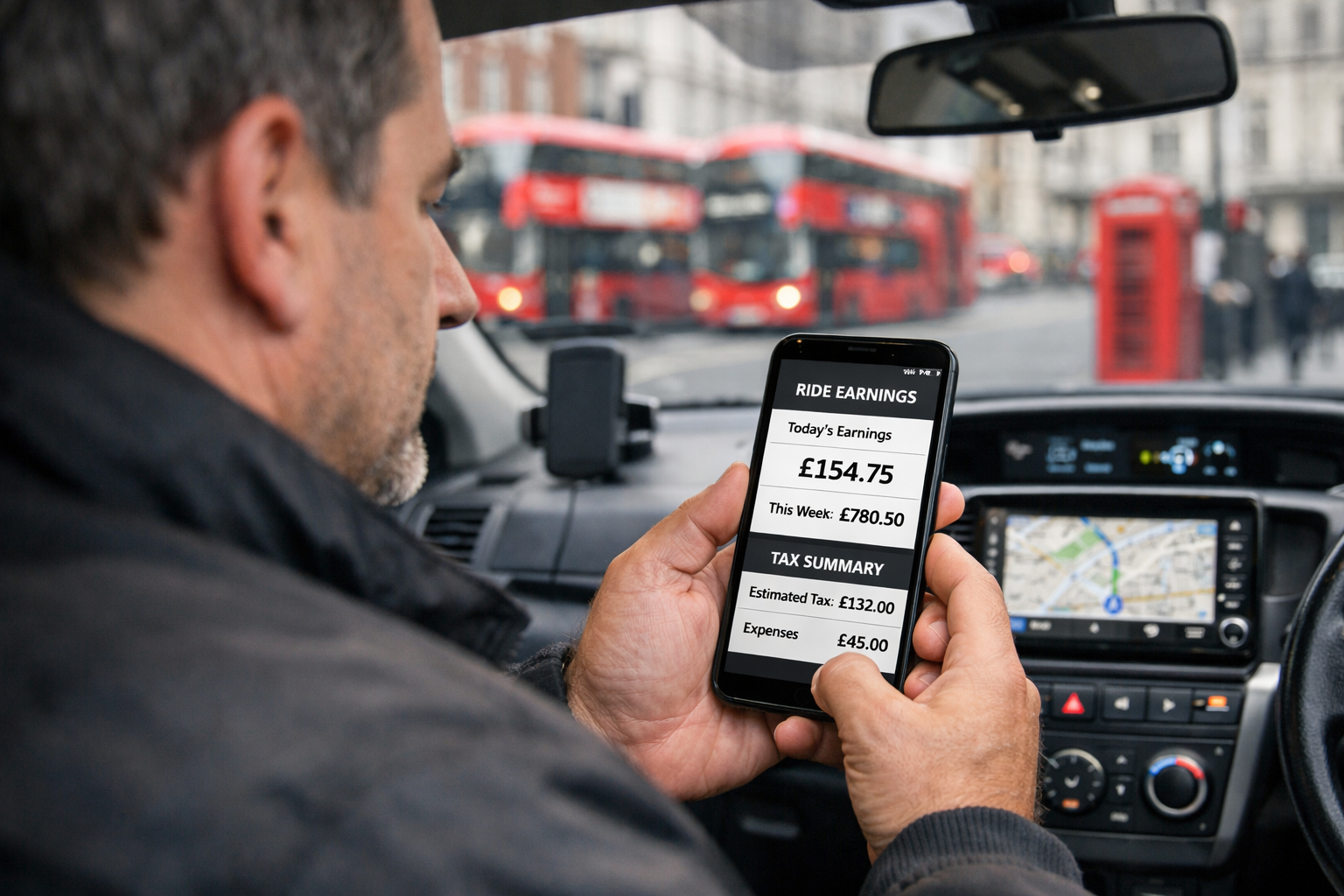
In January 2026 new VAT rules changed how the private hire sector is treated for VAT in the UK. The detail matters: who is the supplier of transport determines who must charge VAT. Platforms, drivers and brokers are now dealing with new tax and contract arrangements that affect fares, margins and forecasting. What happened and why it matters The government updated the VAT approach so fares could become subject to 20% VAT when the platform is the transport supplier. In response, outside London Uber rewrote contracts to emphasise an agency relationship: Uber acts as an agent and the driver is the supplier. That shift moves responsibility for VAT and related reporting to drivers — though many drivers fall below the VAT registration threshold and so fares stay VAT‑free in practice. London remains different because TfL requires a different model. Immediate practical impacts for drivers and operators Drivers must check whether they need to register for VAT, and how that affects take‑home pay and pricing. Operators and fleet owners should review their invoicing and accounting; if platforms change who invoices customers, revenue timing and reclaim rules change too. Brokers and lenders should stress‑test models for different VAT outcomes — what if key routes become taxable? How does that affect margins, residual values and lease payments? How to model the risk (practical steps) Re-run cashflow forecasts with both VAT and non‑VAT scenarios. Identify trigger points where VAT registration would be required (driver turnover thresholds, company turnover). Build contingency for price sensitivity — if fares rise, demand may fall on marginal routes. Review contract terms with platforms and operators to clarify who issues invoices and when payments occur. Longer‑term picture This change reveals how tax and contract design can rapidly reshape market economics. Expect platforms, operators and regulators to keep testing arrangements regionally. For lenders and brokers, the right response is simple: stress‑test, document assumptions, and build buffer into finance structures where VAT or contract role might shift overnight. Bottom line  VAT changes are not just a tax issue — they change who carries cashflow risk. Model both sides, be conservative on revenue assumptions, and make sure documentation captures who is contractually responsible for supply and VAT. That clarity protects drivers, operators and anyone financing vehicles.
By Taxi finance direct team January 27, 2026
The Department for Transport’s consultation to reduce the number of taxi and private hire licensing bodies in England will change how the sector is overseen. Right now 263 different councils and authorities issue licences. The proposal replaces them with roughly 70 local transport authorities. That’s meant to align licensing with transport planning and close gaps where drivers work across borders. What’s changing, in plain terms Fewer licensing bodies should mean more consistent rules across regions. If you’re a driver who regularly crosses council borders, the aim is to reduce the “out‑of‑area” work that makes enforcement and background checks harder. For operators, it could simplify compliance: one set of expectations across a wider area, rather than dozens of different standards. Safety and standards The DfT explicitly links the change to passenger safety. Under a smaller set of licensing authorities, standards for safeguarding, vehicle checks, and driver vetting could be applied more evenly. That should make it easier to trace complaints and to carry out coordinated enforcement where a driver operates across several towns. Business impacts for operators and brokers Operators may face transitional costs: changing administrative processes, revalidating licences, or adapting to new local fees. Brokers and finance partners should model the short term: expect some paperwork and timing risks. In the medium term, though, more consistent rules reduce regulatory uncertainty — which lenders prefer when underwriting vehicle purchases or lease agreements. What drivers need to know  Drivers should watch the consultation closely for changes to licence conditions, medical checks, and fee structures. If you work across borders, a consolidated licensing area could cut duplicate checks and make it easier to work outside your home town. Next steps and timing The consultation closes and the DfT will assess responses before proposing next steps. Any actual change will take time; councils and trade bodies will be consulted on detailed arrangements. For businesses, now is the time to map dependencies — licence renewals, fee cycles and compliance systems — to avoid surprises. Bottom line This is a structural change intended to make licensing fairer and safer. There will be short‑term friction, but for operators, drivers and funders the prize is a clearer, more consistent regulatory framework across larger transport regions. Watch for the DfT’s next announcements and plan transitional cashflow around licence timing.
By taxi finance team January 20, 2026
The UK’s recent VAT change for taxi and private hire journeys has pushed platforms, drivers and local authorities into rapid adjustment. Intended to make taxation fairer, the rule’s knock‑on effects are already changing industry contracts and everyday economics. What changed From early January 2026 the government clarified VAT treatment for journeys sold via platforms. Where a platform buys and resells travel as a principal, VAT applies. To limit the extra VAT bill, some platforms outside London have changed driver contracts so the platform is an agent and drivers are the supplier. That shifts VAT responsibility onto drivers rather than the app. London’s rules differ because Transport for London does not permit the agency model. Immediate effects on drivers and fares Drivers work on tight margins. For many, handling VAT means more paperwork and the need to understand registration thresholds and invoicing. Some drivers worry they will collect VAT but not hit the turnover needed to reclaim input VAT — a cash‑flow and admin headache. Platforms argue the change keeps headline fares lower for riders, but drivers report uncertainty and frustration. Early signs show drivers considering switching apps or reducing hours — which could affect availability in some areas. Supply‑side and local effects The UK market already varies by city. London’s distinct licensing and rules mean drivers there face a different VAT picture than drivers elsewhere. That inconsistency complicates multi‑area fleets and drivers who work across boundaries. Operators and fleet managers must now plan for a mixed regulatory landscape where pricing, compliance and reporting differ by licensing area. Local licensing reforms under DfT consultation could change this picture again, so operators are juggling two moving parts: tax rules and licensing reform. How platforms might respond practically To reduce the burden on drivers, platforms could offer simplified VAT reporting tools, payroll‑like reporting that automates remittance, or transitional support such as guidance sessions and clearer invoicing. Some operators might internalise VAT at platform level in parts of the business where they act as principal, to keep drivers focused on driving rather than tax admin. However, any shift back to platform VAT responsibility is constrained by local rules such as TfL’s stance. Policy trade‑offs and suggested fixes The goal of closing VAT gaps is sensible — it restores revenue and aims at fairness. But policy must avoid offloading complexity onto those least able to bear it. Short‑term fixes: publish clear HMRC guidance tailored to PHV drivers, encourage platforms to provide automated VAT receipts, and offer a transitional window with simplified registration routes. Medium term: align national tax rules with the DfT licensing reforms so drivers working across areas face fewer surprises. Bottom line VAT reform is necessary but fragile in execution. If platforms, regulators and driver bodies work together, the change can land as intended — fairer tax treatment without collapsing driver incomes. If not, the market risks fragmentation, higher costs for some passengers, and real income pressure on drivers. Practical support and clear, consistent rules will determine the outcome.